31 October 2006
Another take on the old "What Is Art?" question
A friend of mine, Paul Butzi, is a photographer. You can see some of his excellent work at his website. He also has a blog there, where he posted this interesting musing on whether the question "What Is Art?" is worth asking at all. Essentially it boils down to what he calls "Paul's Rule": "never ask a question unless you're going to change your behavior based on the answer." He wouldn't stop making photography if it turned out it wasn't art, so perhaps it's not important to know the answer. There's a great story in his post about Jean-Pierre Rampal and a mockingbird, so go read it.


29 October 2006
To Adapt or Not to Adapt
...and that's only the beginning of the question...
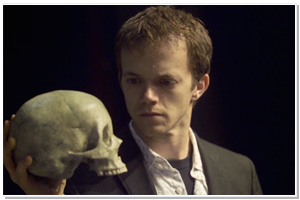
Christopher Yeatts as Hamlet in the Pennsylvania Shakespeare Festival WillPower touring production of Hamlet.
Read: Lilith by George MacDonald.
Watched: A one-hour-and-twenty-minute version of Hamlet by members of the Pennsylvania Shakespeare Festival and a “traditional” performance of King Lear by the theatre department of Northampton Community College.
Listened to: lots of Beatles albums, Bach, Chopin, & contemporary Native American singer/songwriters.
I’ve been wondering about adaptations recently. Here’s the question I’d like readers to answer: Do you hold a sort of “sacrosanct” view of texts, that is, that they should never be adapted, or do you think that anything written is available for change & re-presentation? I’m thinking especially of plays, but this conversation could be relevant for music, books-to-movies, etc. So, do you think that an artist’s original work should stand as it is, or could & should it be adapted to suit the mood of the times? Do you think any “real” presentation of a work is possible when moving from one medium to another, such as page-to-stage, page-to-screen, and so forth?
So, that’s it. That’s my question. But that said, of course I have to go on and give my opinion. First of all, let’s just make it clear that we’re not talking about copyright violations. Let’s assume that the material we’ll discuss is either in the public domain or the adaptor has received permission to do whatever hacking, cutting, and pasting s/he may desire.
I used to believe that any text, or indeed any original work of art, was almost sacred, that it should not be touched or changed at all. I was horrified by The Lord of the Rings when it first came out, due to the drastic changes the director made. He ruined Faramir’s character, changed some crucial speeches, and left out the last sixth of the book! Good grief. Well, now I love those movies for their own sake, but still feel a bit of sinking sickness when I think of all the viewers who may never read the books and will always have the wrong impression. I had a similar reaction to “Narnia” an a first viewing. How dare he change nearly every word of the original book & turn it into a fairly lousy screenplay & throw in some retarded scene of cheesy drama on the ice and leave out the Emperor-Beyond-the-Sea & the Deep Magic from before the Dawn of Time, and why were the children whining to go home all the time? You can see I’m rather passionate about this, still. Even though I appreciate those movies for their own sake, as great movies, I shudder when I think of them as visual representations of the books.
But recently I’ve been developing a new attitude towards adaptations. It began this summer in Oxford, when my prof. Emma Smith said many times that she thought the best directors of Shakespeare were those who were not afraid to cut, paste, change, hack, chop, and disfigure to their hearts’ content. Well, she didn’t exactly say it like that, but that was the idea. Her premise seemed to be that any new production of an old play is a work of art in its own right, and must change with the times/places to be relevant, fresh, and compelling. And I’m beginning to agree with her.
The production of Hamlet by the traveling troupe from the Pennsylvania Shakespeare Festival was extraordinary—very dynamic, very alive, very relevant, and totally exciting. Hamlet dressed in black, of course, but it was black jeans & worn dress shirt & ill-tied tie. The set was like Hot Topic or a Goth-style artist’s flat in Harlem: faded purple & black velvet draped across the back, with well-chosen graffiti scrawled across it: “Remember Me” and “Dust” were most predominant. Ophelia was hovering between a Goth look—black net tights, black tank top over ruffled white dress—and girly-cutsie—pink ballet shoes and a flower in her hair. Clearly, they were teenagers going through identity crises. Claudius and Gertrude, on the other hand, were stiff and business-like, with a roaring-Twenties touch, putting them very far out of touch with Hamlet’s uncertain and artistic world. The ghost’s appearance was accompanied by “Mission: Impossible” or James Bond theme-song kind of music, fast, intense, and supremely modern. One of the guards was a girl, dressed in grey spandex, and all those on watch squatted on the alert with flashlights poised. Think Charlie’s Angels. Very slick, very NOW.
When Hamlet went into his little madness game, he shuffled out wearing a T-shirt that hung to his knees, sneakers about two feet long with their white tongues sticking up, a huge white baseball cap on sideways, and a Sponge Bob necklace. He held his book with the spine perpendicular to his hands, and looked for all the world like a cartoon character.
Oh, and did I mention that the production was 80 minutes long? About maybe 1/3 of the text was presented.
My point in relating all these details is this. I’m coming to think that in the fluid medium of live theatre, adaptations should be just that: adaptations. OED says that “adapt” means “make suitable for a new use or purpose” or “become adjusted to new conditions.” [Thank you, OED.] Shakespeare’s plays have been performed innumerable times. And no one performance on stage can possibly claim to be THE ONE AND ONLY definitive performance that interprets every possible detail according to—what? Shakespeare’s intention? Original performance practice? Elizabethan or Jacobean conditions? The ideal hidden meaning expressed in the outward form? No sir-ee. Each production is a new, fresh perspective, yet another way to look at the play. So I’m starting to think, adapt as you will!
Now, that’s what I think about the fluid medium of theatre. Films, I believe, are in a different category. This is because films are static. Once it’s been filmed, that’s it. OK, sure, so they can release the special edition extended version DVD, and I’m glad when they do (waiting for the “Lion, Witch, & Wardrobe” extended to see what they left out—or in, depending on how you look at that). But even so, that’s fixed. So it does, then purport to be at least a definitive version, if not THE one and only. So, back to LOTR. I’m disturbed by how much was left out & changed of that book/epic/series/triliogy/quadrilogy. Wait, it’s not a quadrilogy yet. Has anyone heard if they are indeed making The Hobbit with what’s-his-name Elijah Wood as Bilbo? Because of the great technology, etc., this film is almost worthy of its literary prototype. Almost. And I’m afraid that it will stand in for the thing itself. So I think that when directors are re-making a masterpiece in a static medium such as film, it behooves them to be as true to the original as possible.
But who knows, maybe one day film too will be somehow a fluid medium, and there will as many LOTRs made as Romeo & Juliets. Who knows. And would that be good or bad?

Christopher Yeatts as Hamlet in the Pennsylvania Shakespeare Festival WillPower touring production of Hamlet.
Read: Lilith by George MacDonald.
Watched: A one-hour-and-twenty-minute version of Hamlet by members of the Pennsylvania Shakespeare Festival and a “traditional” performance of King Lear by the theatre department of Northampton Community College.
Listened to: lots of Beatles albums, Bach, Chopin, & contemporary Native American singer/songwriters.
I’ve been wondering about adaptations recently. Here’s the question I’d like readers to answer: Do you hold a sort of “sacrosanct” view of texts, that is, that they should never be adapted, or do you think that anything written is available for change & re-presentation? I’m thinking especially of plays, but this conversation could be relevant for music, books-to-movies, etc. So, do you think that an artist’s original work should stand as it is, or could & should it be adapted to suit the mood of the times? Do you think any “real” presentation of a work is possible when moving from one medium to another, such as page-to-stage, page-to-screen, and so forth?
So, that’s it. That’s my question. But that said, of course I have to go on and give my opinion. First of all, let’s just make it clear that we’re not talking about copyright violations. Let’s assume that the material we’ll discuss is either in the public domain or the adaptor has received permission to do whatever hacking, cutting, and pasting s/he may desire.
I used to believe that any text, or indeed any original work of art, was almost sacred, that it should not be touched or changed at all. I was horrified by The Lord of the Rings when it first came out, due to the drastic changes the director made. He ruined Faramir’s character, changed some crucial speeches, and left out the last sixth of the book! Good grief. Well, now I love those movies for their own sake, but still feel a bit of sinking sickness when I think of all the viewers who may never read the books and will always have the wrong impression. I had a similar reaction to “Narnia” an a first viewing. How dare he change nearly every word of the original book & turn it into a fairly lousy screenplay & throw in some retarded scene of cheesy drama on the ice and leave out the Emperor-Beyond-the-Sea & the Deep Magic from before the Dawn of Time, and why were the children whining to go home all the time? You can see I’m rather passionate about this, still. Even though I appreciate those movies for their own sake, as great movies, I shudder when I think of them as visual representations of the books.
But recently I’ve been developing a new attitude towards adaptations. It began this summer in Oxford, when my prof. Emma Smith said many times that she thought the best directors of Shakespeare were those who were not afraid to cut, paste, change, hack, chop, and disfigure to their hearts’ content. Well, she didn’t exactly say it like that, but that was the idea. Her premise seemed to be that any new production of an old play is a work of art in its own right, and must change with the times/places to be relevant, fresh, and compelling. And I’m beginning to agree with her.
The production of Hamlet by the traveling troupe from the Pennsylvania Shakespeare Festival was extraordinary—very dynamic, very alive, very relevant, and totally exciting. Hamlet dressed in black, of course, but it was black jeans & worn dress shirt & ill-tied tie. The set was like Hot Topic or a Goth-style artist’s flat in Harlem: faded purple & black velvet draped across the back, with well-chosen graffiti scrawled across it: “Remember Me” and “Dust” were most predominant. Ophelia was hovering between a Goth look—black net tights, black tank top over ruffled white dress—and girly-cutsie—pink ballet shoes and a flower in her hair. Clearly, they were teenagers going through identity crises. Claudius and Gertrude, on the other hand, were stiff and business-like, with a roaring-Twenties touch, putting them very far out of touch with Hamlet’s uncertain and artistic world. The ghost’s appearance was accompanied by “Mission: Impossible” or James Bond theme-song kind of music, fast, intense, and supremely modern. One of the guards was a girl, dressed in grey spandex, and all those on watch squatted on the alert with flashlights poised. Think Charlie’s Angels. Very slick, very NOW.
When Hamlet went into his little madness game, he shuffled out wearing a T-shirt that hung to his knees, sneakers about two feet long with their white tongues sticking up, a huge white baseball cap on sideways, and a Sponge Bob necklace. He held his book with the spine perpendicular to his hands, and looked for all the world like a cartoon character.
Oh, and did I mention that the production was 80 minutes long? About maybe 1/3 of the text was presented.
My point in relating all these details is this. I’m coming to think that in the fluid medium of live theatre, adaptations should be just that: adaptations. OED says that “adapt” means “make suitable for a new use or purpose” or “become adjusted to new conditions.” [Thank you, OED.] Shakespeare’s plays have been performed innumerable times. And no one performance on stage can possibly claim to be THE ONE AND ONLY definitive performance that interprets every possible detail according to—what? Shakespeare’s intention? Original performance practice? Elizabethan or Jacobean conditions? The ideal hidden meaning expressed in the outward form? No sir-ee. Each production is a new, fresh perspective, yet another way to look at the play. So I’m starting to think, adapt as you will!
Now, that’s what I think about the fluid medium of theatre. Films, I believe, are in a different category. This is because films are static. Once it’s been filmed, that’s it. OK, sure, so they can release the special edition extended version DVD, and I’m glad when they do (waiting for the “Lion, Witch, & Wardrobe” extended to see what they left out—or in, depending on how you look at that). But even so, that’s fixed. So it does, then purport to be at least a definitive version, if not THE one and only. So, back to LOTR. I’m disturbed by how much was left out & changed of that book/epic/series/triliogy/quadrilogy. Wait, it’s not a quadrilogy yet. Has anyone heard if they are indeed making The Hobbit with what’s-his-name Elijah Wood as Bilbo? Because of the great technology, etc., this film is almost worthy of its literary prototype. Almost. And I’m afraid that it will stand in for the thing itself. So I think that when directors are re-making a masterpiece in a static medium such as film, it behooves them to be as true to the original as possible.
But who knows, maybe one day film too will be somehow a fluid medium, and there will as many LOTRs made as Romeo & Juliets. Who knows. And would that be good or bad?
15 October 2006
Herbert and "Embodied Theology"
Read: Several chapters into Don Quixote
Listened to: Tannhäuser (Wagner), “Amadeus” soundtrack
Watched: at least part of if not most of: City Lights (Charlie Chaplin), The General (Buster Keaton), Sunrise (F.W. Murnau), M (Fritz Lang), and Citizen Kane (Orson Welles) [all for the film class I'm taking]
This started out as a comment on Sorina’s previous post, but it began to get long enough that I decided to promote it to a post in its own right. I’ve been waiting to let Sorina’s students get a chance to post comments first, but seeing that no one has taken the bait (yet), and I’m chomping at the bit to comment on this one, I’m not going to wait any longer.
I had the pleasure of taking a whole class on the metaphysical poets, particularly Donne and Herbert, at Regent College several summers ago. Herbert is among my top five poets, if not my favorite (depending on my mood).
As for his use of poetic form, Herbert is more creative in inventing new forms than he is strictly adhering to existing forms. Over two-thirds of the poems in his collection The Temple are in a unique meter and rhyme scheme. He plays around with varying line lengths, lots of word play, anagrams (“Anagram”), concrete poetry where the physical shape of the poem on the page relates to the content (“The Altar,” “Easter Wings”), and cross-references between adjacent poems (e.g., a word in the last line of a poem which is taken up in the first line of the next, or the title of a poem which takes up the theme of the preceding one). It is sheer fun to read his poems and discover all his delightful frolicking. And yet, as you pointed out, he wrestled with whether these frills were appropriate for the serious genre of sacred poetry.
However, I disagree with your reading of “Jordan (2).” First, you’ll have to be more specific about what “aspects of Sidney’s secular love sonnet” Herbert is copying. I don’t see the resemblance in form at all. Second, when Herbert writes “There is in love a sweetness ready penn’d: Copy out only that,...” you’ve got to see it in the context of Herbert’s own poetry -- both this very poem, and his whole oeuvre. He begins “When first my lines of heav’nly joys made mention.” So I don’t believe he’s talking about secular love in line 17, but rather about his devotion to God (as in so many of his poems). I think he simply means to exhort himself (the “friend” in line 15 is merely his own conscience speaking to him): “just say plainly what’s written on your heart, and leave all this decorative poetic inventiveness aside, as it only feeds your pride.” But of course he cannot make himself do that and ends up with another poem that’s just as creative as the last. And we, from our vantage point, realize that Herbert was carrying out his vocation from God and needn’t have beaten himself up over his desire to use artistry in his writing.
As for how Herbert uses poetic form to express his theology:
The ordering of the poems in The Temple is ingenious, and speaks of Herbert’s ecclesiology. Overall, the structure is reminiscent of church architecture, with an entrance through “The Church-Porch,” the opening poem. Then the main body of The Temple is called “The Church,” with an introductory poem called “The Altar.” Of course the altar or communion table would have been a focal point in the interior of an English church in his era. Later there is a series of poems with titles depicting other parts of a church, e.g., “The Church-floor” and “The Windows.” Other parts of the collection are organized around liturgical themes and the church year.
Herbert sometimes uses the number of lines per stanza with significance, as in “Sunday” where there are seven lines per stanza, representing the seventh day, and “Trinity Sunday” where there are three stanzas with three lines each. In “Coloss 3.3” he hides a Bible verse along the diagonal, “My life is hid in Him that is my treasure,” displaying concretely what it is to be “hid with Christ in God.”
That’s enough on Herbert, but I would venture to propose that even Scripture itself uses poetic devices to convey theological meaning. Understanding something about the literary techniques employed in great poetry and literature will help in interpreting the Bible. Some would balk at the idea of “reading the Bible as literature” because it seems to be mutually exclusive with reading it as the Word of God; as if “literature” meant something invented out of whole cloth by humans. And indeed many (if not most) college courses that purport to teach the “Bible as literature” are taught by people who think it is only that. But that doesn’t mean they aren’t onto something with regard to the incredible artistry with which the Bible is crafted. And if human artists can embed their theology in their work, as Sorina’s posts are beginning to convince us, how much more can the Artist of Artists do that, through the pens of his intelligent creatures?
Listened to: Tannhäuser (Wagner), “Amadeus” soundtrack
Watched: at least part of if not most of: City Lights (Charlie Chaplin), The General (Buster Keaton), Sunrise (F.W. Murnau), M (Fritz Lang), and Citizen Kane (Orson Welles) [all for the film class I'm taking]
This started out as a comment on Sorina’s previous post, but it began to get long enough that I decided to promote it to a post in its own right. I’ve been waiting to let Sorina’s students get a chance to post comments first, but seeing that no one has taken the bait (yet), and I’m chomping at the bit to comment on this one, I’m not going to wait any longer.
I had the pleasure of taking a whole class on the metaphysical poets, particularly Donne and Herbert, at Regent College several summers ago. Herbert is among my top five poets, if not my favorite (depending on my mood).
As for his use of poetic form, Herbert is more creative in inventing new forms than he is strictly adhering to existing forms. Over two-thirds of the poems in his collection The Temple are in a unique meter and rhyme scheme. He plays around with varying line lengths, lots of word play, anagrams (“Anagram”), concrete poetry where the physical shape of the poem on the page relates to the content (“The Altar,” “Easter Wings”), and cross-references between adjacent poems (e.g., a word in the last line of a poem which is taken up in the first line of the next, or the title of a poem which takes up the theme of the preceding one). It is sheer fun to read his poems and discover all his delightful frolicking. And yet, as you pointed out, he wrestled with whether these frills were appropriate for the serious genre of sacred poetry.
However, I disagree with your reading of “Jordan (2).” First, you’ll have to be more specific about what “aspects of Sidney’s secular love sonnet” Herbert is copying. I don’t see the resemblance in form at all. Second, when Herbert writes “There is in love a sweetness ready penn’d: Copy out only that,...” you’ve got to see it in the context of Herbert’s own poetry -- both this very poem, and his whole oeuvre. He begins “When first my lines of heav’nly joys made mention.” So I don’t believe he’s talking about secular love in line 17, but rather about his devotion to God (as in so many of his poems). I think he simply means to exhort himself (the “friend” in line 15 is merely his own conscience speaking to him): “just say plainly what’s written on your heart, and leave all this decorative poetic inventiveness aside, as it only feeds your pride.” But of course he cannot make himself do that and ends up with another poem that’s just as creative as the last. And we, from our vantage point, realize that Herbert was carrying out his vocation from God and needn’t have beaten himself up over his desire to use artistry in his writing.
As for how Herbert uses poetic form to express his theology:
The ordering of the poems in The Temple is ingenious, and speaks of Herbert’s ecclesiology. Overall, the structure is reminiscent of church architecture, with an entrance through “The Church-Porch,” the opening poem. Then the main body of The Temple is called “The Church,” with an introductory poem called “The Altar.” Of course the altar or communion table would have been a focal point in the interior of an English church in his era. Later there is a series of poems with titles depicting other parts of a church, e.g., “The Church-floor” and “The Windows.” Other parts of the collection are organized around liturgical themes and the church year.
Herbert sometimes uses the number of lines per stanza with significance, as in “Sunday” where there are seven lines per stanza, representing the seventh day, and “Trinity Sunday” where there are three stanzas with three lines each. In “Coloss 3.3” he hides a Bible verse along the diagonal, “My life is hid in Him that is my treasure,” displaying concretely what it is to be “hid with Christ in God.”
That’s enough on Herbert, but I would venture to propose that even Scripture itself uses poetic devices to convey theological meaning. Understanding something about the literary techniques employed in great poetry and literature will help in interpreting the Bible. Some would balk at the idea of “reading the Bible as literature” because it seems to be mutually exclusive with reading it as the Word of God; as if “literature” meant something invented out of whole cloth by humans. And indeed many (if not most) college courses that purport to teach the “Bible as literature” are taught by people who think it is only that. But that doesn’t mean they aren’t onto something with regard to the incredible artistry with which the Bible is crafted. And if human artists can embed their theology in their work, as Sorina’s posts are beginning to convince us, how much more can the Artist of Artists do that, through the pens of his intelligent creatures?
08 October 2006
Milton & the Metaphysical Poets
Read: Phantastes by George MacDonald.
Watched: Cromwell
Listened to: student rap versions of hymns by Isaac Watts & Charles Wesley!!
In a previous post I discussed what I called Bach’s “Embodied Theology”—some of the ways in which Bach expressed his doctrinal beliefs in the very arrangement of notes, rhythms, etc. in his music. Now in this post I’d like to explore something similar in the poetry of John Milton & the “Metaphysical Poets,” especially George Herbert & John Donne, and I’d like my students (and any other readers) to add their thoughts.
There are two ways in which I see Milton, Donne, & Herbert embodying their theology in their works: 1. form & 2. technique. First, poetic form—the shapes they gave to their works. The fact that they chose to use standard, strict forms such as sonnet & epic shows, I think, that they believed the universe was an orderly place. They believed that nature revealed God’s love of organization, structure, and symmetry, so they chose highly organized poetic forms—with some notable exceptions. They also thought, I imagine, that working within boundaries is the best kind of freedom. Only within moral boundaries are people truly free to live & love; only within strict poetry boundaries like 14 lines, iambic pentameter, ababcdcdefefgg rhyme scheme, and so on, is the poet free to be truly creative (again, there are significant exceptions to this rule, and I’ll discuss at least one). That’s one idea the shapes of their poems gives me.
Form works on a larger scale, too. Paradise Lost is in 12 “books”—again, an orderly structure, and one that can have spiritual significance. 12 tribes of Israel, 12 apostles, 12-sided wall around the new Jerusalem, 12 jewels set over the 12 gates…. And Herbert takes form even a step further, using it to interpret & interrogate the meanings of his poems. In “Jordan (2)” (which we did not read in class; but you can find it here), Herbert copies aspects of Sidney’s secular love sonnet, "Loving in Truth", but says that it’s sinful to write decorative sacred poetry, and then ends by implying that all you can do is copy secular love poetry! So he simultaneously condemns & commends himself for using Sidney’s form, and does so by means of the form! He does something similar with the form of “The Wreath,” which perhaps one of my diligent students would explain below? (It would be good practice for the test that’s coming up, hint, hint…).
And the second way I see them working their theology into their poetry is in some of the specific poetic techniques—meter, rhyme, alliteration, etc. Let’s look at Donne’s "Batter My Heart" as an example. In line 4, he says he wants God to “break, blow, burn, and make me new.” Well, he does just that to the poetry! Instead of following the standard - / - / - / - / - / pattern of iambic pentameter, he “breaks” it with a series of strong monosyllables, all alliterating on one of the harshest consonants—to illustrate just how he wants God to pound on his stubborn heart! Another example occurs in Herbert’s “The Wreath” , when Herbert messes up his habitual pattern with the words “crooked winding ways”—illustrating the fact that his sin has messed up his life so badly it’s even messed up the patterns in his poetry! And he does this again on a large scale with the beginning and ending of his poem, which again perhaps a student would explain in a comment? And Milton even uses the complexity of his syntax & the length of his sentences to express the high, lofty, & complicated nature of the spiritual history he’s giving in Paradise Lost.
So now that you (hopefully) understand this idea of embodying doctrinal beliefs in verse, perhaps you can put in some observations of your own. They could be about the 17th century poets, or about any other writers. Or, as always, I’d really love to see examples of other genres (visual arts, music, etc.) that use similar techniques.
Watched: Cromwell
Listened to: student rap versions of hymns by Isaac Watts & Charles Wesley!!
In a previous post I discussed what I called Bach’s “Embodied Theology”—some of the ways in which Bach expressed his doctrinal beliefs in the very arrangement of notes, rhythms, etc. in his music. Now in this post I’d like to explore something similar in the poetry of John Milton & the “Metaphysical Poets,” especially George Herbert & John Donne, and I’d like my students (and any other readers) to add their thoughts.
There are two ways in which I see Milton, Donne, & Herbert embodying their theology in their works: 1. form & 2. technique. First, poetic form—the shapes they gave to their works. The fact that they chose to use standard, strict forms such as sonnet & epic shows, I think, that they believed the universe was an orderly place. They believed that nature revealed God’s love of organization, structure, and symmetry, so they chose highly organized poetic forms—with some notable exceptions. They also thought, I imagine, that working within boundaries is the best kind of freedom. Only within moral boundaries are people truly free to live & love; only within strict poetry boundaries like 14 lines, iambic pentameter, ababcdcdefefgg rhyme scheme, and so on, is the poet free to be truly creative (again, there are significant exceptions to this rule, and I’ll discuss at least one). That’s one idea the shapes of their poems gives me.
Form works on a larger scale, too. Paradise Lost is in 12 “books”—again, an orderly structure, and one that can have spiritual significance. 12 tribes of Israel, 12 apostles, 12-sided wall around the new Jerusalem, 12 jewels set over the 12 gates…. And Herbert takes form even a step further, using it to interpret & interrogate the meanings of his poems. In “Jordan (2)” (which we did not read in class; but you can find it here), Herbert copies aspects of Sidney’s secular love sonnet, "Loving in Truth", but says that it’s sinful to write decorative sacred poetry, and then ends by implying that all you can do is copy secular love poetry! So he simultaneously condemns & commends himself for using Sidney’s form, and does so by means of the form! He does something similar with the form of “The Wreath,” which perhaps one of my diligent students would explain below? (It would be good practice for the test that’s coming up, hint, hint…).
And the second way I see them working their theology into their poetry is in some of the specific poetic techniques—meter, rhyme, alliteration, etc. Let’s look at Donne’s "Batter My Heart" as an example. In line 4, he says he wants God to “break, blow, burn, and make me new.” Well, he does just that to the poetry! Instead of following the standard - / - / - / - / - / pattern of iambic pentameter, he “breaks” it with a series of strong monosyllables, all alliterating on one of the harshest consonants—to illustrate just how he wants God to pound on his stubborn heart! Another example occurs in Herbert’s “The Wreath” , when Herbert messes up his habitual pattern with the words “crooked winding ways”—illustrating the fact that his sin has messed up his life so badly it’s even messed up the patterns in his poetry! And he does this again on a large scale with the beginning and ending of his poem, which again perhaps a student would explain in a comment? And Milton even uses the complexity of his syntax & the length of his sentences to express the high, lofty, & complicated nature of the spiritual history he’s giving in Paradise Lost.
So now that you (hopefully) understand this idea of embodying doctrinal beliefs in verse, perhaps you can put in some observations of your own. They could be about the 17th century poets, or about any other writers. Or, as always, I’d really love to see examples of other genres (visual arts, music, etc.) that use similar techniques.
19 September 2006
Unfinished Tolkien work to be published
This is interesting news: J.R.R. Tolkien's son Christopher has finished a book his father began but never completed, The Children of Hurin. It will be published in 2007. Given that the younger Tolkien has been working on this for the past 30 years, I wonder how much of the work is his father's and how much is his. Nevertheless, fans of Middle Earth will surely go nuts over another story about the elves and dwarves from LOTR. CNN story.
13 September 2006
Macbeth and Predestination
Read: C. S. Lewis: A Biography by Roger Lancelyn Green & Walter Hooper.
Watched: the first part of HBO’s Elizabeth I
This is a re-hash of a previous post. My students & I have been exploring this topic in Language Arts classes recently, so I repost it here for their sakes, looking forward to their comments.
David Taylor once said artists must read their systematic theology. Indeed, I do believe that great Christian art is (partly) only as good as its doctrine. Partly; skill/craftsmanship/aesthetic excellence are also essential. But I also think that the debates over theological points are as fertile as solid convictions. The “Problem of Evil,” for example, functions as the catalyst for large passages in Augustine’s Confessions, Dante’s trilogy, Milton’s Paradise Lost….
And the debate over Free Will vs. Predestination is another such matter. We’ve been reading Macbeth for the last month or more, putting it into the context of cultural controversies. One hot topic of Shakespeare’s time was this problem about “Does God deterimine all things beofre they begin, or are human beings free to create their own [eternal] destinies?” And it was very hot; wars were raging all over Europe in the latter half of the 16th century over Catholicism, Anglicanism, Lutheranism, and Calvinism. Shakespeare, man of the age, was certainly not going to let this red-letter debate slip by. But he also didn’t want to lose his head.
However that may be, the author of the introductory matter in our Norton Critical Edition, Robert S. Miola, claims that “Whatever his personal convictions, Shakespeare clearly adopts a Catholic view of the action and theology of free will in this play” and “the doctrine of predestination renders human action essentially undramatic: when the end is known, preordained, and absolutely just, there can be no real choice, suspense, conflict, or resolution. This conception of divine justice and human action renders pity an impertinence, terror a transgression, and tragedy an impossibility” (pp. xv, xvi).
Maybe we shouldn’t be so sure. I have a problem with that sweeping generalization. I wouldn’t say that predestination freezes all possibility of dramatic action. I’d like to make two points:
1. The characters do not know the ending. They are within a double predestination, as it were. Theologians will pardon me for abusing the term. First, they might be predestined by God, if such is the writer’s or audience’s belief. Second, they are certainly predestined by the intent and will of the artist. Or perhaps I have those in the wrong order?
2. In life, we do not know our ending. The staunchest Calvinist, if he has his wits about him, believes that here inside time we must make choices. Yeah, perhaps God has set the choice before hand, certainly God knows what will be done, but that does not make the psychological and emotional experience of choice any less a reality. Any less real. It is also thus inside works of art.
So, here’s the question: Is Macbeth free to choose his fate, or is he destined to follow the prophecies? We’ve talked about how much the witches knew, could they see the future, would Macbeth have become king even without killing Duncan, are the “equivocating” words of the weird sisters quite “fair” from a spiritual point of view, do telling the future and making big decisions create parallel universes… you know, the usual literary discussions. :)
So now, let’s continue that conversation. Feel free to answer the above question, offer new questions, or give other examples of how this doctrinal dilemma has been the catalyst for great passages of writing. Or I’d really love to see examples of other genres (visual arts, music, etc.) that use this or other theological paradoxes for their meaning and motive!
Watched: the first part of HBO’s Elizabeth I
This is a re-hash of a previous post. My students & I have been exploring this topic in Language Arts classes recently, so I repost it here for their sakes, looking forward to their comments.
David Taylor once said artists must read their systematic theology. Indeed, I do believe that great Christian art is (partly) only as good as its doctrine. Partly; skill/craftsmanship/aesthetic excellence are also essential. But I also think that the debates over theological points are as fertile as solid convictions. The “Problem of Evil,” for example, functions as the catalyst for large passages in Augustine’s Confessions, Dante’s trilogy, Milton’s Paradise Lost….
And the debate over Free Will vs. Predestination is another such matter. We’ve been reading Macbeth for the last month or more, putting it into the context of cultural controversies. One hot topic of Shakespeare’s time was this problem about “Does God deterimine all things beofre they begin, or are human beings free to create their own [eternal] destinies?” And it was very hot; wars were raging all over Europe in the latter half of the 16th century over Catholicism, Anglicanism, Lutheranism, and Calvinism. Shakespeare, man of the age, was certainly not going to let this red-letter debate slip by. But he also didn’t want to lose his head.
However that may be, the author of the introductory matter in our Norton Critical Edition, Robert S. Miola, claims that “Whatever his personal convictions, Shakespeare clearly adopts a Catholic view of the action and theology of free will in this play” and “the doctrine of predestination renders human action essentially undramatic: when the end is known, preordained, and absolutely just, there can be no real choice, suspense, conflict, or resolution. This conception of divine justice and human action renders pity an impertinence, terror a transgression, and tragedy an impossibility” (pp. xv, xvi).
Maybe we shouldn’t be so sure. I have a problem with that sweeping generalization. I wouldn’t say that predestination freezes all possibility of dramatic action. I’d like to make two points:
1. The characters do not know the ending. They are within a double predestination, as it were. Theologians will pardon me for abusing the term. First, they might be predestined by God, if such is the writer’s or audience’s belief. Second, they are certainly predestined by the intent and will of the artist. Or perhaps I have those in the wrong order?
2. In life, we do not know our ending. The staunchest Calvinist, if he has his wits about him, believes that here inside time we must make choices. Yeah, perhaps God has set the choice before hand, certainly God knows what will be done, but that does not make the psychological and emotional experience of choice any less a reality. Any less real. It is also thus inside works of art.
So, here’s the question: Is Macbeth free to choose his fate, or is he destined to follow the prophecies? We’ve talked about how much the witches knew, could they see the future, would Macbeth have become king even without killing Duncan, are the “equivocating” words of the weird sisters quite “fair” from a spiritual point of view, do telling the future and making big decisions create parallel universes… you know, the usual literary discussions. :)
So now, let’s continue that conversation. Feel free to answer the above question, offer new questions, or give other examples of how this doctrinal dilemma has been the catalyst for great passages of writing. Or I’d really love to see examples of other genres (visual arts, music, etc.) that use this or other theological paradoxes for their meaning and motive!
10 September 2006
Resources on Christianity and the Arts
I sent an email this evening to a pastor friend of mine who had recently asked me for some suggested resources on Christianity and the Arts. It's worth reproducing here, with some minor tweaks and book links added.
Books/Articles:
Rookmaaker, Hans. Modern Art and the Death of a Culture. A bit dated, but still a classic in this field. Rookmaaker, along with Francis Schaeffer, was one of the early influences on evangelicals finally coming back to think seriously about the arts.
Sayers, Dorothy. The Mind of the Maker. She compares the human creative act (especially that of writing) to God's creative act and sees trinitarian implications there.
Sayers, Dorothy. The Zeal of thy House. Wonderful play about an architect who struggles with faith, defiance towards God, and pride. He designs a cathedral which ultimately serves as the act of worship he was unable to give any other way. "Behold, he prayeth; not with the lips alone, / But with the hand and with the cunning brain / Men worship the Eternal Architect. / So, when the mouth is dumb, the work shall speak / And save the workman." Out of print; limited availability/expensive in used market; check libraries.
Begbie, Jeremy. Voicing Creation's Praise: Towards a Theology of the Arts. Very scholarly/theoretical, but gives a good foundation. Begbie is a brilliant musician/theologian from the UK, one of the key names in the arena of faith and the arts today. I know him personally. He's taught summer school classes at Regent, and I supported and attended his "Theology Through the Arts" conference in Cambridge in 2000. Fabulous!
Begbie. Jeremy, ed. Beholding the Glory: Incarnation Through the Arts. A more readable collection of essays about theology through various specific arts: literature, poetry, dance, icons, sculpture, music.
Johnston, Robert. Reel Spirituality: Theology and Film in Dialogue. Encourages a two-way conversation between theology and film. The stories in films can teach us about reality, and a theological perspective can help us interpret films.
Wolterstorff, Nicholas. Art in Action: Toward a Christian Aesthetic. Sees art as an instrument of action in the world, and artists as responsible servants.
Van Gogh, Vincent. The Letters of Vincent van Gogh. Intriguing insight into the mind and spiritual life of an artist who was very tormented by his vocation, but who truly saw it as a calling from God, and in spite of his tragic life ended up making a huge impact with his art.
Wilkinson, Loren. "'Art as Creation' or 'Art as Work'?" Crux, March 1983, pp. 23-28. I can't improve on Brad Baurain's summary: "An excellent essay, seeking a synthesis between sacramentalist (emphasizing creativity) and Reformed (emphasizing stewardship) perspectives on the arts." Loren is a friend of mine and one of my favorite professors at Regent. Alas, the article is not available online, but it should be, and I'm working on trying to rectify that (permissions, etc.)
Larsen, David. The Company of the Creative: A Christian Reader's Guide to Great Literature and Its Themes. A very useful reference book.
Debray, Régis. The Old Testament Through 100 Masterpieces of Art, and The New Testament Through 100 Masterpieces of Art. Two volumes of excellent reproductions of great art depicting themes in the Bible, with commentary.
Essays online:
Vonnahme, Nathan. "Art as Witness." Paper written for Regent College class "The Christian Imagination."
Websites:
Image Journal - the premier journal of Christian faith and the arts; to its credit it has in a short while (50 issues) become one of the top 10 literary journals of any sort in the United States; poetry, short fiction, essays, visual art on color plates; high quality publication; co-sponsors the annual Glen Workshop (Christian artists/writers conference) in Santa Fe.
Christians in the Visual Arts - organization that encourages, promotes, and fosters networking among Christian visual artists; holds annual summer workshops at Gordon College, and co-sponsors the Glen Workshop with Image Journal.
Mars Hill Audio - engaging in contemporary culture from the vantage point of Christian conviction; they publish an audio journal and have lots of interviews related to the arts; some free tracks are available as MP3 downloads (click "Listen for Free")
Diary of an Arts Pastor (excellent blog by David Taylor) - David is a Regent alum and currently arts pastor at Hope Chapel in Austin, TX, a very arts-focused church indeed. He's a thoughtful writer, and is working on a book (to be published by Baker) on Christianity and the arts which promises to be very comprehensive (he's been posting outlines of his chapters as he works on it).
Iambic Admonit - this blog! :-)
Modern and Contemporary Poets of Christian Faith - a substantial list put together by a professor of English Literature at Dallas Baptist University
Art Index (aka Art Concordance) - thematic and Scripture indexes of artwork, with links to online reproductions
Movie Index (aka Movie Concordance) - topical index of movies with biblical themes, with links to reviews and articles about each movie
Ransom Fellowship's "Movie Central" - reviews and resources for leading movie discussions that will develop discernment and deepen discipleship.
Arts & Faith (discussion forums)
The Arts & Faith Top 100 Spiritually Significant Films
Books/Articles:
Rookmaaker, Hans. Modern Art and the Death of a Culture. A bit dated, but still a classic in this field. Rookmaaker, along with Francis Schaeffer, was one of the early influences on evangelicals finally coming back to think seriously about the arts.
Sayers, Dorothy. The Mind of the Maker. She compares the human creative act (especially that of writing) to God's creative act and sees trinitarian implications there.
Sayers, Dorothy. The Zeal of thy House. Wonderful play about an architect who struggles with faith, defiance towards God, and pride. He designs a cathedral which ultimately serves as the act of worship he was unable to give any other way. "Behold, he prayeth; not with the lips alone, / But with the hand and with the cunning brain / Men worship the Eternal Architect. / So, when the mouth is dumb, the work shall speak / And save the workman." Out of print; limited availability/expensive in used market; check libraries.
Begbie, Jeremy. Voicing Creation's Praise: Towards a Theology of the Arts. Very scholarly/theoretical, but gives a good foundation. Begbie is a brilliant musician/theologian from the UK, one of the key names in the arena of faith and the arts today. I know him personally. He's taught summer school classes at Regent, and I supported and attended his "Theology Through the Arts" conference in Cambridge in 2000. Fabulous!
Begbie. Jeremy, ed. Beholding the Glory: Incarnation Through the Arts. A more readable collection of essays about theology through various specific arts: literature, poetry, dance, icons, sculpture, music.
Johnston, Robert. Reel Spirituality: Theology and Film in Dialogue. Encourages a two-way conversation between theology and film. The stories in films can teach us about reality, and a theological perspective can help us interpret films.
Wolterstorff, Nicholas. Art in Action: Toward a Christian Aesthetic. Sees art as an instrument of action in the world, and artists as responsible servants.
Van Gogh, Vincent. The Letters of Vincent van Gogh. Intriguing insight into the mind and spiritual life of an artist who was very tormented by his vocation, but who truly saw it as a calling from God, and in spite of his tragic life ended up making a huge impact with his art.
Wilkinson, Loren. "'Art as Creation' or 'Art as Work'?" Crux, March 1983, pp. 23-28. I can't improve on Brad Baurain's summary: "An excellent essay, seeking a synthesis between sacramentalist (emphasizing creativity) and Reformed (emphasizing stewardship) perspectives on the arts." Loren is a friend of mine and one of my favorite professors at Regent. Alas, the article is not available online, but it should be, and I'm working on trying to rectify that (permissions, etc.)
Larsen, David. The Company of the Creative: A Christian Reader's Guide to Great Literature and Its Themes. A very useful reference book.
Debray, Régis. The Old Testament Through 100 Masterpieces of Art, and The New Testament Through 100 Masterpieces of Art. Two volumes of excellent reproductions of great art depicting themes in the Bible, with commentary.
Essays online:
Vonnahme, Nathan. "Art as Witness." Paper written for Regent College class "The Christian Imagination."
Websites:
Image Journal - the premier journal of Christian faith and the arts; to its credit it has in a short while (50 issues) become one of the top 10 literary journals of any sort in the United States; poetry, short fiction, essays, visual art on color plates; high quality publication; co-sponsors the annual Glen Workshop (Christian artists/writers conference) in Santa Fe.
Christians in the Visual Arts - organization that encourages, promotes, and fosters networking among Christian visual artists; holds annual summer workshops at Gordon College, and co-sponsors the Glen Workshop with Image Journal.
Mars Hill Audio - engaging in contemporary culture from the vantage point of Christian conviction; they publish an audio journal and have lots of interviews related to the arts; some free tracks are available as MP3 downloads (click "Listen for Free")
Diary of an Arts Pastor (excellent blog by David Taylor) - David is a Regent alum and currently arts pastor at Hope Chapel in Austin, TX, a very arts-focused church indeed. He's a thoughtful writer, and is working on a book (to be published by Baker) on Christianity and the arts which promises to be very comprehensive (he's been posting outlines of his chapters as he works on it).
Iambic Admonit - this blog! :-)
Modern and Contemporary Poets of Christian Faith - a substantial list put together by a professor of English Literature at Dallas Baptist University
Art Index (aka Art Concordance) - thematic and Scripture indexes of artwork, with links to online reproductions
Movie Index (aka Movie Concordance) - topical index of movies with biblical themes, with links to reviews and articles about each movie
Ransom Fellowship's "Movie Central" - reviews and resources for leading movie discussions that will develop discernment and deepen discipleship.
Arts & Faith (discussion forums)
The Arts & Faith Top 100 Spiritually Significant Films
Subscribe to:
Posts (Atom)