Read: Isaiah Chapter 5
Listened to: Tchaikovsky’s 1812 Overture, the version with full chorus and children’s chorus
I do worry about the new shift in literary priorities, the replacing of “good old” classics with not-quite-so-good, maybe as old, certainly not classics! Where will the next generation of readers be if they read, in high school, Charlotte Smith’s “Beachy Head” instead of Wordsworth’s “Prelude”; Felicia Hemans to the exclusion of Coleridge; Frederick Douglas’s slave narratives rather than Uncle Tom’s Cabin; and “the greatest masterpiece of Japanese prose narrative” replacing Moby Dick? But there is not time to read both, I mean all of the above. Such students/readers would have a different perspective on literature, and consequently, somehow on life. They would likely value social awareness and influence over compositional skill—wait, hum, that’s already happened. They might probably search for issues of race and gender rather than spiritual elevation or exaltation of the human soul. Wait, again: we already do. In the halls of higher learning, this shift has already occurred.
In my graduate classes, that’s what we do. Now, let me explain. We do not read Smith to the exclusion of Wordsworth; we read them side-by-side, as a comparison. We do not talk about slavery rather than The Sublime; we talk about both. So that’s good. In that context we have time to look at both the old priorities and the new. And we already have that rootedness Rosie recommends.
What will happen when this shift makes its way down the academic ladder, I don’t know. Do teenage readers need “a rootedness in one particular tradition”? I wonder. I would be heartbroken if every reader knew The Tale of Genji and not one knew Paradise Lost. But is that just my preference? Let’s unpack that more.
What about globalization? Christians, with everyone, need to be ready for this new earth. We need to be aware of and sensitive to all the cultures and traditions we will encounter in our neighborhoods and all over the world. We hop on planes as easily now as our ancestors stepped into Model-Ts. No, more comfortably! So why not read about the heritage of the places we’ll step off into?
Well, we can never read it all. Once, up until the 18th century, I think, it was possible for one man (or woman) to have read everything, EVERYTHING ever published. Some had done it. Coleridge is believed to have come close, though he lived into the printing boom. It is now not only impossible to read everything, it is not even close to possible to read everything even on one narrow subject. OK, maybe you could read everything about, say, organic okra farming, but you could never read everything about organic farming in general. And even excluding the internet (who does that now?), there are far too many books and periodicals. Even excluding periodicals, there are far too many books to read them all. One must choose. One is, of necessity, choosing to exclude thousands of books when one picks up one. When I picked up one particular biography on Tolkien last night, I was excluding all the others [unfortunately, for that one turned out to be no good as far as getting to know Tolkien the man]. So should young readers be trained to be snackers in literature? Read a little snippet of English poetry, a bite of Japanese prose, a tidbit of African folk tale, an appetizer of Australian fiction, an hoers d’ouevres of the American novel, a taste of Greek epic, a nibble of Latin epigram, a sip of Norse myth, a crumb of Saxon verse, a sampling of Asian poems, and a smorgasbord of modern plays? Or should they first be immersed in one tradition, so as to have some comparison to jump off of, some foundation to judge from?
Well, then the question becomes, whose tradition should be privileged in American education? Ours, simply because we were born into it? Well, why not. It’s a good tradition. Does it boast anything over others? Well, maybe it boasts its long association with the Judeo-Christian tradition. Maybe we (Westerners, Americans, Christians) think our literature is worth teaching to our children because of its spiritually healthy origins and associations.
Or, to put the same thing in a negative way: Perhaps as Christians we are afraid of losing the great spiritual classics, the books from a time that was, apparently, more sensitive to the Holy Spirit than now. Perhaps we understand the loss to consciousness, the weakness of a worldview built without (for example) Milton’s perspective on sin, marital love, choice, divine predestination, the problem of evil, the possibility of Paradise, the necessity of the Son of God as intercessor, etc. There is something about reading these things in his fabulous blank verse that brings them to life. It’s not better than reading the Bible, but it might be more memorable, or more vivid, or more fresh and new. So, yes, Christians can always read the Bible, but won’t we lose something without Milton?
That said, our “Western Canon” does not include Jewish writing, or a lot of the early Christian fathers, or the mystics (generally). And the new shift towards finding out overlooked authors often turns up very spiritual characters, such as Jones Very and Alice Meynell.
Part of me wants to end this by saying: The Holy Spirit will take care of Himself. God is big enough to be found through any literary tradition, and He will not let truth disappear. Reading, say the writings of Confucius instead of the Book of Proverbs, or even Poor Richard’s Almanac, will not make Proverbs any less true, or the writings of Confucius anything more than sometimes right and sometimes wrong thoughts of a wise but fallen human being. So should we teach any and all literature and let God look after the formation of young minds?
Or should we approach this from another point of view? “Train up a child in the way he should go, and when he is old he will not depart from it.” Train up a child surrounded by the books that are rooted in the spiritual tradition s/he must be rooted in, and then s/he will grow up with a taste for The Good. Maybe. Then, as you say Rosie, then teach readers as they grow older to dip into every tradition for the flavours of the exotic, the tastes of the foreign.
I’d love to hear what other people have to say. I’d love to know what somebody thinks who was raised on the literature of another culture all together and thinks that has contributed only positively to his/her Christian worldview.
29 March 2006


23 March 2006
Memorizing poetry
Read: Part of RoadSense for Drivers: BC's Safe Driving Guide (in preparation for taking the test to get my British Columbia driver's license); Milton's sonnet "On His Blindness" (see below)
Listened to: More Italian vocabulary; Mendelssohn's String Symphony No. 8 in D (a version transcribed for winds), in streaming audio over KING-FM, Seattle's 24-hour classical music station; I'm listening to the latter from up in Vancouver as I type this (oh, the wonders of the Internet!)
Today I picked up and leafed through my copy of Committed to Memory: 100 Best Poems to Memorize (edited by John Hollander), looking for a poem to work on memorizing. My mother grew up in an era where every schoolchild was required to memorize lots of poetry, and she sure did! I missed out on that, so I've been trying to make up for lost time. I selected Milton's "On His Blindness," which was already quite familiar to me, but I'd never gotten it down by heart. After an hour working on it in the car on the drive up to Vancouver today (before switching on the Italian lessons CD), I pretty much have got it. (Don't tell the BC driver's licensing folks that I was reading a book of poetry -- albeit only one line at a time, and with very infrequent glances -- while driving!!)
There are so many benefits to memorizing poetry. It becomes a part of you and shapes your appreciation of other poems. It nourishes your imagination and helps inspire your own poetry (or other art form). It can become part of your prayer language, just as memorized hymns can be (and are for me in a big way); hymns are, after all, a special kind of poetry. When, in your waning years, you begin to lose your short-term memory, the poems and songs and Scripture you've memorized will be some of the last things to go (along with childhood memories; a great argument for filling up a child's memory bank with wonderful experiences to keep her in happy reverie in her senescence).
Of course, as with any anthology, Committed to Memory is one particular person's (or committee's) idea of what are the "best" poems to memorize. I have begun making my own anthologies of poems and things, because others' collections never quite cut it as my own definitive list. However, I find it helpful to use others' canons of "great books" or "must-have classical recordings" as a jumping off point for making my own lists. I probably have about two dozen books of the "list of books" genre, including The NY Public Library's Books of the Century, Clifton Fadiman's The Lifetime Reading Plan, etc.
So... Do you memorize poetry? What are some poems you would put on your own "best poems to memorize" list? Why? What makes a poem good to memorize? I have some incipient thoughts on this, but will wait to develop them further and see what others write before posting them. I will at least tantalize you with a few of the poems I've got so far in my personal anthology of poems to memorize. All but the last two are commonly anthologized and probably frequently memorized, but I'm glad to have found a couple that make my own list unique.
"Love (III)" (Herbert)
"God's Grandeur" and "Pied Beauty" (Hopkins)
"Fire and Ice," "The Road Not Taken" and "Stopping By Woods on a Snowy Evening" (Frost)
"The Apologist's Evening Prayer" (C.S. Lewis)
"Nativity" (R.S. Thomas)
Listened to: More Italian vocabulary; Mendelssohn's String Symphony No. 8 in D (a version transcribed for winds), in streaming audio over KING-FM, Seattle's 24-hour classical music station; I'm listening to the latter from up in Vancouver as I type this (oh, the wonders of the Internet!)
Today I picked up and leafed through my copy of Committed to Memory: 100 Best Poems to Memorize (edited by John Hollander), looking for a poem to work on memorizing. My mother grew up in an era where every schoolchild was required to memorize lots of poetry, and she sure did! I missed out on that, so I've been trying to make up for lost time. I selected Milton's "On His Blindness," which was already quite familiar to me, but I'd never gotten it down by heart. After an hour working on it in the car on the drive up to Vancouver today (before switching on the Italian lessons CD), I pretty much have got it. (Don't tell the BC driver's licensing folks that I was reading a book of poetry -- albeit only one line at a time, and with very infrequent glances -- while driving!!)
There are so many benefits to memorizing poetry. It becomes a part of you and shapes your appreciation of other poems. It nourishes your imagination and helps inspire your own poetry (or other art form). It can become part of your prayer language, just as memorized hymns can be (and are for me in a big way); hymns are, after all, a special kind of poetry. When, in your waning years, you begin to lose your short-term memory, the poems and songs and Scripture you've memorized will be some of the last things to go (along with childhood memories; a great argument for filling up a child's memory bank with wonderful experiences to keep her in happy reverie in her senescence).
Of course, as with any anthology, Committed to Memory is one particular person's (or committee's) idea of what are the "best" poems to memorize. I have begun making my own anthologies of poems and things, because others' collections never quite cut it as my own definitive list. However, I find it helpful to use others' canons of "great books" or "must-have classical recordings" as a jumping off point for making my own lists. I probably have about two dozen books of the "list of books" genre, including The NY Public Library's Books of the Century, Clifton Fadiman's The Lifetime Reading Plan, etc.
So... Do you memorize poetry? What are some poems you would put on your own "best poems to memorize" list? Why? What makes a poem good to memorize? I have some incipient thoughts on this, but will wait to develop them further and see what others write before posting them. I will at least tantalize you with a few of the poems I've got so far in my personal anthology of poems to memorize. All but the last two are commonly anthologized and probably frequently memorized, but I'm glad to have found a couple that make my own list unique.
"Love (III)" (Herbert)
"God's Grandeur" and "Pied Beauty" (Hopkins)
"Fire and Ice," "The Road Not Taken" and "Stopping By Woods on a Snowy Evening" (Frost)
"The Apologist's Evening Prayer" (C.S. Lewis)
"Nativity" (R.S. Thomas)
Natural or Organic? No GMOs!
Read: The Dark Tower, an [(should that be ‘a’?) heartbreakingly, frustratingly!] unfinished novel by C. S. Lewis—I think one day I’ll host a contest in which participants write possible endings. I’m dying to read the rest of it, but it doesn’t exist!
Listened to: more Father Brown, part of the soundtrack to “Evita,” and my “Music Composition in Medieval and Renaissance Forms” students’ final compositions.
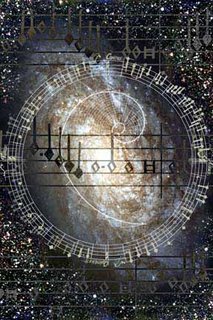
I need to put a caveat on my comments about art that opposes “natural principles.” Let it never be assumed that I think it is for that reason not art! 12-tone music, for example, is a very impressive art form. Schoenberg and the rest thought that the traditional foundations on which music had been built for centuries had crumbled, so they decided to invent a new system. They did not set out to work contrary to the way the universe works; they simply chose a new method. The system of ternary harmony, they thought, was worn out. This system of triads, by the way, seems to have some “natural” basis in the radio frequencies/pitches produced by the planets, or the “songs of the stars.” These theories stem from Pythagoras, Ptolemy, and Kepler.
Click here for Music of the Spheres
But Schoenberg & Co. decided to use a new system, a mathematical principle of musical equality. There’s nothing wrong with that as a philosophy. But, see, they really thought that it would be great as a music, too. Schoenberg is often quoted as saying in a few generations or so, kids would be whistling 12-tone rows in the street. Well. It didn’t work. And I don’t like the music. I love studying it (what could be more fun than a dodecaphonic matrix, I ask you that??), but I don’t like to listen to it. That could be just me. But have I any right to say it is not great art just because it sounds awful??
And what about composers who dip a mouse’s feet in ink and let it walk across the score, then play the resulting notes? Aren’t a mouse’s steps according to nature? Hum. I’m arguing with myself here. Sure, there’s rhythm and pattern in the way that little guy trots. But does it therefore follow that it would make good music? Funnily enough, aleatoric (“chance”) music and serialized (12-tone) sound pretty much the same. The least organized and the most organized.
So, in other words, I have no idea what I’m talking about when I say art must conform to natural principles to be great. There seems to be no logical reason why an “arbitrary” organization some guy came up with out of his head is unnatural. Aren’t human thought processes natural? And really, those paintings made by elephants, or monkeys, or dogs, are more natural, in one sense, than those made by people through their overactive rationality. This is coming back around, like the conversation on soul. We probably cannot tell how much soul is in a work.
Is everything a strange loop?!?
Thanks to the brilliant Douglas Hofstader
Listened to: more Father Brown, part of the soundtrack to “Evita,” and my “Music Composition in Medieval and Renaissance Forms” students’ final compositions.
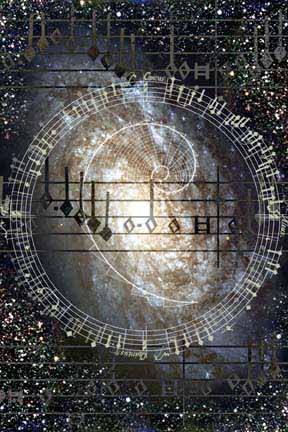
I need to put a caveat on my comments about art that opposes “natural principles.” Let it never be assumed that I think it is for that reason not art! 12-tone music, for example, is a very impressive art form. Schoenberg and the rest thought that the traditional foundations on which music had been built for centuries had crumbled, so they decided to invent a new system. They did not set out to work contrary to the way the universe works; they simply chose a new method. The system of ternary harmony, they thought, was worn out. This system of triads, by the way, seems to have some “natural” basis in the radio frequencies/pitches produced by the planets, or the “songs of the stars.” These theories stem from Pythagoras, Ptolemy, and Kepler.
Click here for Music of the Spheres
But Schoenberg & Co. decided to use a new system, a mathematical principle of musical equality. There’s nothing wrong with that as a philosophy. But, see, they really thought that it would be great as a music, too. Schoenberg is often quoted as saying in a few generations or so, kids would be whistling 12-tone rows in the street. Well. It didn’t work. And I don’t like the music. I love studying it (what could be more fun than a dodecaphonic matrix, I ask you that??), but I don’t like to listen to it. That could be just me. But have I any right to say it is not great art just because it sounds awful??
And what about composers who dip a mouse’s feet in ink and let it walk across the score, then play the resulting notes? Aren’t a mouse’s steps according to nature? Hum. I’m arguing with myself here. Sure, there’s rhythm and pattern in the way that little guy trots. But does it therefore follow that it would make good music? Funnily enough, aleatoric (“chance”) music and serialized (12-tone) sound pretty much the same. The least organized and the most organized.
So, in other words, I have no idea what I’m talking about when I say art must conform to natural principles to be great. There seems to be no logical reason why an “arbitrary” organization some guy came up with out of his head is unnatural. Aren’t human thought processes natural? And really, those paintings made by elephants, or monkeys, or dogs, are more natural, in one sense, than those made by people through their overactive rationality. This is coming back around, like the conversation on soul. We probably cannot tell how much soul is in a work.
Is everything a strange loop?!?
Thanks to the brilliant Douglas Hofstader
21 March 2006
On young people and art
Unless you become as a little child, you shall not inherit the Kingdom of God.
My students were amazing on Friday night! They read much famous poetry, and a good deal of their own. I loved the feeling of the evening: We sat in a row, my poets and I, in white-and-black, on tall stools, speaking into the silence the listeners opened up for us. Our voices rolled straight out through the coloured lights into the darkness where all the ears were, into their brains, clear and profound. Our poetry sounded so good there! Appreciation adds beauty upon beauty. My kids wrote of love, death, nature, faith, confusion, loss, worry, tranquility, and dogs and frogs. We made them laugh, we made them sigh, we made them sit silent and see pictures in their heads!
And before and after the words, we gave them music. Here's a picture [which I stole from somebody's xanga, thanks!] of the band, high and crazy on their own volume and velocity (and man, it was loud and fast!!)

My students were amazing on Friday night! They read much famous poetry, and a good deal of their own. I loved the feeling of the evening: We sat in a row, my poets and I, in white-and-black, on tall stools, speaking into the silence the listeners opened up for us. Our voices rolled straight out through the coloured lights into the darkness where all the ears were, into their brains, clear and profound. Our poetry sounded so good there! Appreciation adds beauty upon beauty. My kids wrote of love, death, nature, faith, confusion, loss, worry, tranquility, and dogs and frogs. We made them laugh, we made them sigh, we made them sit silent and see pictures in their heads!
And before and after the words, we gave them music. Here's a picture [which I stole from somebody's xanga, thanks!] of the band, high and crazy on their own volume and velocity (and man, it was loud and fast!!)

Art can be Fun! or, Fun can be Art??
Wow, this is so cool. Art doesn't always have to be as serious as we're making it out to be!! And yet, this takes as much dedication as wielding a pen, I would imagine....
Click here to watch Chris Bliss juggling
It's a bit long, and it only becomes more dazzling as it goes along, so try to watch the whole video. Enjoy!
Click here to watch Chris Bliss juggling
It's a bit long, and it only becomes more dazzling as it goes along, so try to watch the whole video. Enjoy!

On fantasy literature
Here's an article by a pastor in my area. I was motivated to put this on by Rosie's timely comments on fantasy literature (under the "Why bother?" post). I heartily agree. "Fiction" is often more true than most of the books you find in the non-fiction section (self-help, opinion, biography, history....) So here's one opinion on the Harry Potter craze. I have one somewhere that takes a different position, by Chuck Colson, and I'll try to find it. Tammy, if you have it, would you post it?
Welcome Back Harry Potter!
I am both an ordained minister and a Harry Potter fan. I know this makes me a ‘persona non grata’ in some church circles. But the less-than-academy-quality acting and screen writing aside—I still enjoyed the latest movie in the series, “The Goblet of Fire”.
Don’t get me wrong, I am quite aware of many Christian critiques of the series. First critique? “Harry Potter blurs the lines between right and wrong!” Are you kidding me? It is a modern morality play. The ongoing fight between good and evil is the undergirding of the entire narrative. Granted, Harry has a “certain disregard for the rules”—but arguably so did Jesus. Sometimes, rules can be harmful and restrain ‘good’. Sometimes it is ‘right’ to break rules. Remember 1776?
Maybe what's offensive to many is not that Harry does good, but that he has to struggle not to do evil. Harry is in Gryffindor, but is aware of a streak of Slytherin within his heart. Remember that even the sovereign Sorting Hat had a hard time determining where to place Harry. I get this struggle. I confess that for me, doing Gryffindor is often at odds with the bent of my heart toward Slytherin. It is not Harry Potter that blurs the line between good and evil---the real culprit is my heart.
Second main critique? “Harry Potter encourages the exploration of magic and witchcraft!” I prefer to say that Harry Potter—as well as Lord of the Rings, Brothers Grimm, Star Wars, The Lion, the Witch and the Wardrobe—anything by Shyamalan--invites us to look beyond our senses. For too long the woods have been disenchanted. For too long have we been lulled to sleep by simplistic ‘muggle’ science that hoped to explain all phenomenon in the cosmos. I was trained as a scientist—an engineer—the president of the Math Honor Society. I found great solace in equations that gave me the same answer every time. But I am now more passionate about the unexplainable than the formulaic. I have seen far too many things that challenge my formulas. The forests are indeed enchanted. By the way, scientists are coming around. Quantum Physics has shattered the formulaic science of my generation. Modern scientists are more like ancient medicine men, or shaman who are fetishly naming the powers that cannot be seen—quarks, etc. They are more and more aware that the molecules themselves are ‘enchanted’.
Thank God for people like Tolkien, Lewis and Rowling who invite us to continually enter mystical realms—to imagine, to have higher expectations for the creation. This is after all what the Bible does. We are invited to become aware of the higher realm—a realm of miracle (the Christian political-speak for ‘magic’). In that realm, things happen that are inexplicable. There are powers and forces that are beyond our wildest dreams—beyond science, beyond formula, beyond our comfort. Now that’s what I am talking about!
Maybe we are just a little bit jealous that JK Rowling does so much imagining with far less material at her disposal than we have. Maybe she challenges us to be recaptured by the stunning imagination of the Bible again. No doubt, sorcery is very dangerous. But I believe passionately that the Bible presents a reality far more dangerous! Harry Potter-like sorcery and witchcraft are really pathetic counterfeits of the highest power in the universe, God Himself. What could be more magical (or miraculous if you prefer) than the birth of Jesus Christ? Imagine the fantasy-like scene of the angelic beings hovering over the shepherds. Or a virgin conceiving, a whale, an ark, a Triune God who speaks, pursues, loves, embraces. If anyone is mildly attracted to the mystery of sorcery, they should be wildly attracted by the wonders of the Bible, what C.S. Lewis refers to as the Deep Magic.
Maybe what we should be most offended by is not Harry Potter, but any hyper-formulaic science that has no place for the enchanted, mysterious and the miraculous. Maybe, just maybe, that is what we need to protect our children from! What do you think?
Pastor Bill Senyard,
pastorbill@pvcsquared.org
Peace Valley Community Church
December, 2005
Welcome Back Harry Potter!
I am both an ordained minister and a Harry Potter fan. I know this makes me a ‘persona non grata’ in some church circles. But the less-than-academy-quality acting and screen writing aside—I still enjoyed the latest movie in the series, “The Goblet of Fire”.
Don’t get me wrong, I am quite aware of many Christian critiques of the series. First critique? “Harry Potter blurs the lines between right and wrong!” Are you kidding me? It is a modern morality play. The ongoing fight between good and evil is the undergirding of the entire narrative. Granted, Harry has a “certain disregard for the rules”—but arguably so did Jesus. Sometimes, rules can be harmful and restrain ‘good’. Sometimes it is ‘right’ to break rules. Remember 1776?
Maybe what's offensive to many is not that Harry does good, but that he has to struggle not to do evil. Harry is in Gryffindor, but is aware of a streak of Slytherin within his heart. Remember that even the sovereign Sorting Hat had a hard time determining where to place Harry. I get this struggle. I confess that for me, doing Gryffindor is often at odds with the bent of my heart toward Slytherin. It is not Harry Potter that blurs the line between good and evil---the real culprit is my heart.
Second main critique? “Harry Potter encourages the exploration of magic and witchcraft!” I prefer to say that Harry Potter—as well as Lord of the Rings, Brothers Grimm, Star Wars, The Lion, the Witch and the Wardrobe—anything by Shyamalan--invites us to look beyond our senses. For too long the woods have been disenchanted. For too long have we been lulled to sleep by simplistic ‘muggle’ science that hoped to explain all phenomenon in the cosmos. I was trained as a scientist—an engineer—the president of the Math Honor Society. I found great solace in equations that gave me the same answer every time. But I am now more passionate about the unexplainable than the formulaic. I have seen far too many things that challenge my formulas. The forests are indeed enchanted. By the way, scientists are coming around. Quantum Physics has shattered the formulaic science of my generation. Modern scientists are more like ancient medicine men, or shaman who are fetishly naming the powers that cannot be seen—quarks, etc. They are more and more aware that the molecules themselves are ‘enchanted’.
Thank God for people like Tolkien, Lewis and Rowling who invite us to continually enter mystical realms—to imagine, to have higher expectations for the creation. This is after all what the Bible does. We are invited to become aware of the higher realm—a realm of miracle (the Christian political-speak for ‘magic’). In that realm, things happen that are inexplicable. There are powers and forces that are beyond our wildest dreams—beyond science, beyond formula, beyond our comfort. Now that’s what I am talking about!
Maybe we are just a little bit jealous that JK Rowling does so much imagining with far less material at her disposal than we have. Maybe she challenges us to be recaptured by the stunning imagination of the Bible again. No doubt, sorcery is very dangerous. But I believe passionately that the Bible presents a reality far more dangerous! Harry Potter-like sorcery and witchcraft are really pathetic counterfeits of the highest power in the universe, God Himself. What could be more magical (or miraculous if you prefer) than the birth of Jesus Christ? Imagine the fantasy-like scene of the angelic beings hovering over the shepherds. Or a virgin conceiving, a whale, an ark, a Triune God who speaks, pursues, loves, embraces. If anyone is mildly attracted to the mystery of sorcery, they should be wildly attracted by the wonders of the Bible, what C.S. Lewis refers to as the Deep Magic.
Maybe what we should be most offended by is not Harry Potter, but any hyper-formulaic science that has no place for the enchanted, mysterious and the miraculous. Maybe, just maybe, that is what we need to protect our children from! What do you think?
Pastor Bill Senyard,
pastorbill@pvcsquared.org
Peace Valley Community Church
December, 2005
Survey of Christian Classics
Read: Thomas Howard's brilliantly enlightening comments on Many Dimensions in his (Howard's) indespensible The Novels of Charles Williams.
Listened to: The beginning of Chesterton's Father Brown mysteries on tape.
Next year I hope to teach again a Survey of Christian Classics course, like the one I used to teach at BICS, but this time for high school students. I would like your advice on the reading list. Here are the works I plan to use thus far. This is a modification of the syllabus Rosie's mom used to use. Rosie, I'll pull out that list you sent of contemporary Xian writers and see who I else can add who's still alive. :)
St. Augustine, Confessions
“Caedmon’s Hymn”
“The Dream of the Rood”
Julian of Norwich’s “Revelations of Divine Love”
Dante Alighieri, The Divine Comedy: Inferno, Purgatorio, and Paradiso
Roland Bainton’s Here I Stand
Luther’s Ninety-Five Theses
John Milton, Paradise Lost
John Bunyan, The Pilgrim’s Progress
Selections from Jonathan Edwards’ Basic Writings
Short stories by Nathaniel Hawthorne
George MacDonald, The Princess and Curdie
Short stories by Flannery O’Connor
C. S. Lewis, The Great Divorce
A Sacrifice of Praise: An Anthology of Christian Poetry by James H. Trott (Poetry of Donne, Herbert, Vaughan, Coleridge, C. Rossetti, Hopkins, Eliot, Luci Shaw, Scott Cairns, et al.)
We will, unfortunately but necessarily, be using only selections of these works. They are, after all, high school students, albeit very intelligent and motivated homeschoolers.
Listened to: The beginning of Chesterton's Father Brown mysteries on tape.
Next year I hope to teach again a Survey of Christian Classics course, like the one I used to teach at BICS, but this time for high school students. I would like your advice on the reading list. Here are the works I plan to use thus far. This is a modification of the syllabus Rosie's mom used to use. Rosie, I'll pull out that list you sent of contemporary Xian writers and see who I else can add who's still alive. :)
St. Augustine, Confessions
“Caedmon’s Hymn”
“The Dream of the Rood”
Julian of Norwich’s “Revelations of Divine Love”
Dante Alighieri, The Divine Comedy: Inferno, Purgatorio, and Paradiso
Roland Bainton’s Here I Stand
Luther’s Ninety-Five Theses
John Milton, Paradise Lost
John Bunyan, The Pilgrim’s Progress
Selections from Jonathan Edwards’ Basic Writings
Short stories by Nathaniel Hawthorne
George MacDonald, The Princess and Curdie
Short stories by Flannery O’Connor
C. S. Lewis, The Great Divorce
A Sacrifice of Praise: An Anthology of Christian Poetry by James H. Trott (Poetry of Donne, Herbert, Vaughan, Coleridge, C. Rossetti, Hopkins, Eliot, Luci Shaw, Scott Cairns, et al.)
We will, unfortunately but necessarily, be using only selections of these works. They are, after all, high school students, albeit very intelligent and motivated homeschoolers.
Subscribe to:
Posts (Atom)