
Interview with Silagh White, director of ArtsLehigh
[her first name is pronounced just like “Sheila”]
at Arts Lehigh, Lehigh University, Bethlehem, PA
16 July 2010

I. MAKING MUSIC RELEVANT
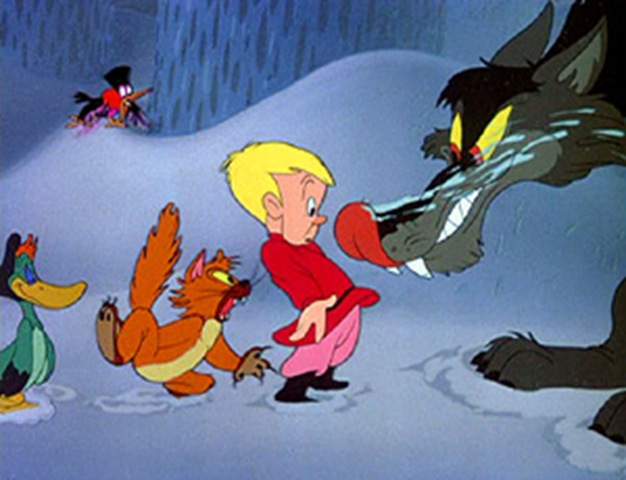
 SW: When I was finishing up my doctoral studies at the Eastman school, I was lucky enough to be in a quintet with Young Audiences of America. With that quintet, our show that we would take around to schools was a woodwind quintet version of Peter and the Wolf. And, you know, we made it a little bit cheesy; quite honestly, it was pure cheese. The flute player would wear a hat with a bird on it; and then the oboe player, her hat would have a duck bill on it; because I’m a bassoonist, I had to figure out how to play through this burlap mask. I would have to open up the fur so I could stick my reed in my mouth! Anyway, what we would do, is that the narration would take turns. So if the flute player was playing the theme, someone else would be talking about Peter. Our flute player was our spokesperson, and at the end of one particular show—visualize this with me—we’re all in a “Cafetorium,” and all the kids are sitting around, filling the floor space, criss-cross applesauce, and their teachers are in chairs surrounding the back wall. And the furniture of the cafetorium was stacked over on the side, so we’re on the stage area. We finish our little shtick and the flute player stands up and she says [babytalk voice]: “That piece was written by Sergei Prokofiev. Can you say Sergei Prokofiev?” And all the kids say, “Sergei Proko—” “Good! Do you know that Sergei Prokofiev wrote communist propaganda in this piece?” Yeah. And the teachers in the back are like, What? And all of us are, like, OK. We know that she’s been studying for her doctoral comps, so her head was basically full of this really high-level information. And I just stood up, and I said: “Julie, that’s reeeeeally interesting; hey, kids, how many of you guys watch cartoons? And what sound happens when the coyote falls over the cliff? Can anyone imitate the sound for me?” And then I would turn to Pam, the clarinet player, aside: “Can you do that? Can you play like a descending chromatic scale?” So we brought it back to relevance for them. At the end of the show, she was soooooo mad at me. She said, “How dare you interrupt me?” I said, “Julie, you were not connecting with these kids. I mean, I was sensing disaster. You can just kind of feel that moment just before everybody is about to lose their patience with you.” And she said to me, “Well, you don’t have kids; how do you know? I have a four-year-old.” So, again, this complete disconnect!
And about the same time I was playing with the Rochester Philharmonic, and it was the same kind of, not really understanding who your audience is. They were trying to sell “Casual Classics” series. And they said the marketing should be: “Wear Jeans! Free Beer!” NO! A casual classics is: We’re not going to make the theatre dark, so you can actually read the program notes. And we’re going to take extra long intermissions. And it’s OK to applaud between movements. It’s kind of completely smashing the audience’s expected behaviors, and throwing them out the window, and then letting them respond on their terms, not on the terms you’re dictating.
This is where it all started. What was really cool about the whole experience was just this awakening, this true awakening. So it was really kind of cool. And it really sharpened my teeth. I learned that it’s really not about the artists. It doesn’t work without the artists, but it’s not about you and your ego. It’s about all of us being stewards of the experience for our audience. So it was a really cool way for me to really get an understanding of what teachers were facing in the classroom, and the disconnect between that and the artists—oh, that’s why the artists need to know the standards! And how can I turn educationalese language into something artists can understand and work with? Because there’s this language barrier. So it kind of grew then.
II. DREADED MUSIC APPRECIATION CLASSES?
One of my adjunct assignments was teaching Music Appreciation in a couple of colleges. I LOOOOVE teaching music appreciation: love it. Most of my other colleagues that are teaching in college are like, “Music Appreciation? Ugh.” You have no idea how much fun it can be! One of the things that I would do—seeing how enthusiastic the high school students were when I gave them that fabric of relevance that then fed into the experience?—I had my college students sit in an orchestra rehearsal. They weren’t just in the audience, they were IN the orchestra. So I worked this out with one of the orchestras I was playing with, and their personnel manager. He gave me a few minutes one rehearsal after the tuning note, and I said, “Look, this is what I want to do. I’ll limit it to so many people, but I want a student in the French horns, a student in the second violins, and the violas, etc., just all around, so that they can then share notes on their perspective.” And I did this more than once. A typical response was: “I didn’t know they talked in the middle rehearsal. I didn’t know the conductor talked so much. Now I saw what the conductor was doing” (because you only ever see his back)—to the completely ridiculous observations, “OMG those horn players spit a lot!” (as they empty their valves), and “What’s that stuff they’re sticking on the bow?” So they’re really noticing some physical things that they never would have noticed from that far of a distance.
 IA: Did you try to do it with a piece of music they’d already studied? SW: Always. So, they would hear it, they would have some of that biographical background of the composer, and all of that stuff that’s very abstract and intellectual, but it was the actual physical thing, and from noticing something on their own, that I didn’t point out, is what really made it their experience. So then after they had that experience in the rehearsal, and then we brought them to the concert, they were—they had their own knowledge, their own grasp of it from that perspective. So even though they were seeing the conductor’s back, they knew what he was doing from the front. They could remember some of the challenges that they musicians were working on in rehearsal, so they were listening for them. So they’re listening experience was even deeper. And THEN, after the concert, they’re like, “They got through that one part! Remember they were struggling so hard in rehearsal? It sounded really good! They were together!” Etc. They owned it. IA: That’s brilliant!

III. SOMETHING RISQUÉ AT THE ART MUSEUM
SW: I think where a lot of this also came into play was in the visual arts, not necessarily in the performing arts, when I was a docent at the Toledo Museum of Art. And the docent program in Toledo was very similar to the Philly program; you have to go through training for two years before they allow you to give a tour. It’s like a minor in art history. But these docent programs, the ones that are that serious about making sure that whoever is being steward-for-the-day knows, first, what they’re talking about, but then they’ll try to engage the audience. What they don’t do is stand in front of an object and read the label out loud. What they do is something called open-ended questions. So it starts off with, “Tell me what you see” instead of “You will notice a strong resemblance to X” or “A prevalent use of cerulean blue; that represents blah-blah-blah-blah-blah.” No! If you ask the audience, standing in front of a picture painted by Van Gogh, “What do you see,” and somebody says, “I didn’t notice this before: it’s so lumpy.” “Really? How do you see it’s lumpy? Well, let’s look at this painting over here and we’ll compare the lumpiness of these paintings.” And that’s when you start getting into this ownership of their observations, a mini-layer of understanding. And that’s when you can start showing them the difference between more “painterly” lumpiness here, and something that’s maybe a bit more “brusherly”—painterly and brusherly?—and make up words! But then if you get them to own their own observations, that’s when you put on a accent: “Oh, and by the way, in the art world, that’s called painterly, and painterly is…dut-dut-dut-dut-…” And that’s part of the Impressionism, and you start layering on language, so that when they’re having conversations with other people about art, they can start throwing these things out, like they’re knowledgeable cocktail partyist or something. And now they feel like they’re welcome into this community instead of disengaged. I mean, this is kind of funny, I love working with teenagers, and middle school is my favorite age. Before I did this whole thing, and before I even started my doctoral studies, I was a band director. And I loved it. I love that geeky, pre-pubescent hormonal stage. It’s so much fun, before they become jaded. It’s when they start realizing that they are different—sometimes it’s hard, but sometimes it’s, different is OK. But I had so much fun just kind of experiencing middle school kids that when I was a grad student, I gave tours for these groups. I toured with one public school, and I was working with teacher who said, “These kids are kind of rough. They’re not really sophisticated. Well, they’re all boys.” So I asked her, “With your permission, I’d like to do something a little risqué. It’s all with the collection, so it’s not like it’s not already in their faces, and it’s not in public.” So I did “The Titty Tour.” So we went around the museum looking for pictures that had bare breasts in them, and it was called “The Titty Tour.”
 And what was so funny was that these kids were looking at art in a way they’ve never looked at it before. And they’re like, “Wow, the museum is awesome!” And then putting some perspective on the female form. Why did so many artists in so many countries across so many years embrace nudity? What is being talked about here? And then you see this one, where a woman’s feeding her children. Well, it’s because it’s a source of food here. Nurturing. And then we got into this whole conversation about nudity in art, and social convention, and body image, and these guys are having these conversations about thing you never would have thought that they would notice. And the teacher just kind of went, “OMG! These guys have an incredible perspective on nudity.” It was really cool. So it was affectionately known as “The Titty Tour.” And I did that a couple times. It was full disclosure for the parents, but it was an amazing Aha Moment for me. And you would think these kids don’t see, but they do. No kidding.
IV. NO HOGGING AUDIENCES
IA: Now, when you first started ArtsLehigh, you had somewhat of a hard time getting the arts faculty on board. Are they on board now, and in what ways? SW: Initially. Well, I think a lot of it was when I saw brought into this position, there was this really interesting, “What is ArtsLehigh?” And it started with a—in 2002, the then-dean of the School of Arts and Sciences put together a task force. And the task force was wrestling with, How do we broaden engagement with the arts? Because, you know, this is a problem everywhere. Audiences are graying and students aren’t paying attention. I’ve got my theories, but, for our cultural voice here—and my theories go back to the 1983 Nation at Risk, which then came into standardized curriculum, which then, you know, shoved the arts out of the center. That was twenty six years ago. And so a lot of the students that are all pounding math and science down their throats, saying, “We don’t have time for this frill stuff,” and, you know, so we started separating our disciplines. And since we were inventing the rules of engagement as we went along, and the departments are really all about structure as we know it in this discipline, inventing as we go along doesn’t come from strangers. You really have to be working together over a period of time. So we tried out a couple of different presenting things, you know, an arts fest; it was all about embracing a different way of doing things, and it kind of smashed into disciplines.
So the initial challenge was building that relationship with the faculty. And the way we did it was kind of head-on, we’re here, we’re not going away, let’s try to do something together. But it takes time. I put a lot of investment into knowing their work. And I still do. I go to every play I can, every opening, every concert. I’m in the orchestra, I do attend a lot of student activity stuff that is not part of the department stuff. And a lot of it is just on another principle, which is, If I want the community to care about me, then I’d better care about the community, and be there. Visibility says a lot. So it’s not just what I do on campus; it’s also what I do in the local community. Going out there, attending things, being there, and not necessarily wearing my brown-and-white Lehigh hat. It’s me being there, being arts-supporting. It’s neat that art is not a provincial thing. It’s not: “ArtsLehigh has art,” or “The theatre department has art.” It’s like, you know, there’s room at the table for everybody. Because, guess what, our audience is finite, and if we don’t want to be a cannibalistic culture, we have to try to grow our audience together.
And the other thing that is really cool for me is something that I’m also getting the faculty on board with, and they’re enthusiastic about it, is the creative process. You know? Same thing that goes back to that rehearsal: the process of bringing that piece of music together as an ensemble, or the process of new playwriting. What does a playwright go through when it comes from their heads on to the page and then is spoken? Or an artist who is doing an installation and runs up against a challenge that stops what they thought they were going to be able to do and they have to work their way around it? That’s the kind of stuff that people are starting to get enthusiastic about. And it’s really exciting for me, because all of a sudden I see an artist having a conversation with an English faculty about the creative process and how one in the visual arts can influence creative writing, like, Oh, this is juicy! All I did was make this introduction. It’s almost like setting up blind dates.

V. HISTORICAL ANALYSIS
IA: May I attempt an historical analysis of what you’re talking about? SW: Go ahead! Good luck! IA: OK. I’m going to frame it in the form of a question. Do you think that what you’re doing right now, your entire challenge, is that you’re trying to recover from Romanticism? You’re trying to recover from British Romanticism and Transcendentalism, the idea of isolated artist in the garret who says, “Talk to my audience? Are you kidding? I am the genius challenging…” SW: Oh, yes. OMG, yes. I think a lot of this came from when I did my doctoral studies, I did a lot of ethnomusicology, and read a lot of culture, music and culture, talking about the sacred line between audience and performer, the sacredness of the expectations of the audience, and the worship and celebrity. What is it in our culture that allows this kind of behavior and worship, idol worship, in a way? And what’s interesting is, you’re right, it’s kind of Romanticism, but it’s not the Romantic like people have it today. And I think that the genius, artists’ genius, where you are obviously touched by the Muse and things just flow out of you: I hate that. I am here to dispel that. Quite honestly, the struggling artist is not struggling because they’re hungry; they’re struggling because they have something that they cannot articulate, and there’s something inside them that has to come out in some way. And sometimes when words fail, art speaks, right? 
VI. SOCIAL MEDIA AS ARTS PROMOTION
IA: What are some projects you are engaged in currently, or some dreams you have for the future? SW: Social media is really big. With social media, there’s an opportunity for the audience to engage with each other, and I’ve been on facebook since I came here. That was when you needed to have a university address to sign up, so it was before they opened it up to everybody. Twitter I’ve been on for about a year and a half, and I’ve just started location-based social media: FourSquare, GoWalla. All of these are a way to engage in conversation. It’s not, “Come to this. Come to this. Buy tickets for that.” It’s about sharing. What I like about Twitter is that it gave me a tool to start listening to the community, meeting people on a whole different level. Well, personally, I’ve developed a whole posse: a network of people who are very enthusiastic about this place called South Bethlehem. Incredibly civically engaged. They care about independent stores, they care about cultural organizations, they are about this place. And so listening to people and starting to follow people just through conversations, because you can build your network through the way it’s set up---and I’m not going to explain it. But I found that there is a very vibrant community online from Bethlehem who just hold this place so dear. And it’s not separate. The culture, the art experience, is not separate from that affection. So what I’ve been working on is a project with FourSquare as a tool to help students learn more about South Bethlehem.
Again, I’m not extracting it just to be about the art vendors. No, it’s about the sense of place, and space. You can’t pull it out. Art is a part of culture. So it’s about all of the restaurants that have art on their walls, it’s about the independent stores that are really enthusiastic about local artists, it’s about all the venues that have open mikes. It’s about really embracing the creative energy in our community. And if there’s a fifty-percent-off sale at the Pop Mart (that I just found last night when I was at an art opening); I was like, [on Twitter] “OMG, fifty percent off at Pop Mart! And by the way, check out the art opening!” Stuff like that. I’m starting to find that people want to connect. This is a really cool tool for them to connect on their own terms. The whole thing is FourSquare is about finding your friends and finding your space. So I was playing around with it, watching trending issues with it, also finding again more people who checked into the same places I meet them. So it’s just been a really interesting tool.
But Harvard, UNC Greensboro, have used FourSquare to kind of identify buildings on their campuses. Instead of a campus map, FourSquare users can use their FourSquare to get around campus. But I want to use it as a tool for connection. because typically when students start finding little hidden secrets from other students, that’s really finding it on their own terms. It’s not some map that some office has created and that has given the good-seal stamp of approval, saying, “These are the places you should be.” It’s a bit of recognizing that students are their own deciders, and let them be. And so if you offer them as many tool as you can to say, “If you want to stick in your dorm room for four years, it’s your loss, but it’s up to you.” And so that’s why I’ve been working on it. Because I know that when students start feeling an ownership of their own experiences in this community, that’s when they’re going to start trying something new. “I’m going to go to First Friday. I’m going to check out some designs. OMG! The students from the design department put those projects together? Holy cow! Or, I didn’t know that the students from the Visual Arts department put those paintings on the wall in that restaurant. I didn’t know that guy in my dorm did open mike.” It’s that kind of stuff. It’s that kind of thing. The table’s big enough, guys. And so what I’m hoping is that if we can grow a little social media awareness, every once in a while we can start swarming—which is insider information about FourSquare, but what it really means is when there’s fifty or more people who check in at a location, we “swarm.” There’s that new identify. We’re all using FourSquare, but we’re all here together.
IA: You mean, those people didn’t know each other before, but FourSquare will send them a notification saying, “Now there are fifty of you who have checked in here; why don’t you meet?” Is that the idea? SW: If you want to. Some people would say, “Privacy issue flags, all over the place!” Like I said, these are tools that you have to figure out how you’re going to use them. So, yeah, that’s my big project. But social media is something that I’ve really been exploring a lot of tool to get people to start talking about their own experiences. But at the same time, one of my facebook efforts has been—sometimes it takes an effort to understand the experiences, so I put in like, YouTube videos, and links to articles about plays, and excerpts, or, you know, when I was teaching music appreciation, I used to call it—what’s the name of one of those Hollywood Insider shows? Where they talk about, you know, the titillating issues behind the stars—I would do that with composers, like, “Did you know there was a ménage a trois there, you know. Well, this guy liked her, and she liked, him, and it was a little messy! And it was very publicly messy! Ooo! OK, now that you know that, let’s see how he was expressing some of that angst in his music.” You know, that kind of thing. It’s probably creative misinterpretation, but O what fun! 
…QUESTIONS FOR THE READER
1. Have you ever used social media as a means of promoting the arts? If so, how?
2. Have you ever used social media in your art? How?
3. Do you have any great stories about a teacher who enabled you to connect with the arts in a new way?
4. Or do you have any strategies you use to help young people fall in love with the arts?
5. What would a “casual classics” concert look like to you?


